 Amanda Dawn
Jordan Peterson’s diet, widely known as the Lion Diet, is a near-carnivore eating plan built almost entirely around beef, salt, and water, with little to no vegetables, fruit, or grains. He started this extreme elimination approach around 2018 to manage autoimmune symptoms and anxiety, after his daughter Mikhaila Peterson had already developed the same protocol for her own joint and mood issues. It’s not the same thing as standard keto. Keto still leaves room for vegetables, nuts, and a mix of fats, while the Lion Diet strips almost everything down to one food: beef.

Evidence-reviewed, not hands-on tested. Everything below comes from Peterson family interviews, contemporaneous reporting, and published nutrition research, not from someone on our team eating ribeye three meals a day for a month.
What Actually Is the Lion Diet?
So where did this thing come from, and why does a psychology professor end up eating beef for breakfast, lunch, and dinner? The honest answer starts with his daughter, not with him.
Mikhaila Peterson had been diagnosed with juvenile idiopathic arthritis as a child and spent years cycling through medications, joint replacements, and a long depression. By her mid-20s she’d tried cutting out food group after food group looking for relief, and she eventually landed on something close to just beef, salt, and water. She documented the full process, including the diagnosis history and the order she removed foods in, on her own site mikhailapeterson.com in 2018.
Jordan watched his daughter’s symptoms improve and decided to try a version of the same thing himself. According to a 2022 Guardian feature on the lion diet trend, he started experimenting with a diet of mostly beef and salt around 2018, crediting it with easing long-standing anxiety and an autoimmune skin condition.
Key Components of the Lion Diet
At its strictest, the Lion Diet allows exactly three things: beef, salt, and water. No vegetables. No fruit. No grains, legumes, or dairy. Some versions loosen slightly to include other ruminant meats, a little pepper, or occasionally eggs, but the Peterson family’s own account sticks close to the original three.
That’s a sharp departure from the diet described on most keto sites, including this one, where vegetables, nuts, and a range of healthy fats are the norm. If you’ve read our guide on eating low-carb with fruits and vegetables, you already know how different that approach is from cutting plants out entirely.
How the Lion Diet Compares to Keto and Carnivore
Readers searching for the Jordan Peterson diet are usually asking one real question: how does this stack up against the kind of keto most people actually eat? Here’s the side-by-side.
Notice the gap in carbs and vegetables. Standard keto keeps non-starchy vegetables on the plate specifically because they supply fiber, vitamin C, and micronutrients that are hard to get from meat alone. The Lion Diet and strict carnivore skip that trade-off entirely and bet on meat covering everything the body needs.
The Health Implications of the Lion Diet
Potential Benefits
Do extreme elimination diets like this actually help anyone? Some of the reported benefits aren’t just anecdotal. A 2021 survey of more than 2,000 self-identified carnivore dieters, published in Current Developments in Nutrition, found that most respondents reported improvements in conditions ranging from joint pain to depression, with few reporting adverse effects.
That lines up with what Mikhaila Peterson has described for her own arthritis and mood symptoms, and with what Jordan Peterson has said about his anxiety. But here’s the catch: the survey relied entirely on self-report, with no control group and no blood work tracked over time. It tells you what people believe happened, not what a controlled trial would show.
For someone dealing with a suspected food-trigger condition, an elimination approach like this can genuinely surface a pattern that a less restrictive diet would miss. That doesn’t mean beef, salt, and water is the right starting point for everyone.
Possible Risks and Side Effects
Cutting out every plant food isn’t free. Fiber, vitamin C, and several antioxidants are much harder to get from an all-beef plate, and the British Dietetic Association named restrictive all-meat and carnivore-style diets among its list of diets to avoid in 2021, a list it published in December 2020, citing exactly that gap when they’re followed without medical supervision.
There’s also a separate issue worth being honest about. In early 2020, The New York Times reported on Jordan Peterson’s benzodiazepine dependence and withdrawal, which included a period of treatment in Russia and Serbia. That health crisis was tied to prescription medication, not the diet itself, and it’s worth separating the two rather than treating one as proof about the other.
If you’ve got diabetes, kidney issues, or a history of disordered eating, this isn’t a diet to try without a doctor or dietitian involved. Anyone considering it for an autoimmune condition should look at our broader guide on how diet changes affect autoimmune disease before going to this extreme.
A Day of Eating on the Lion Diet
Breakfast
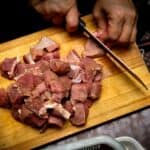
Forget eggs and avocado toast. On the strict version of this diet, breakfast is beef, usually a steak or ground beef, seasoned with salt and nothing else. Some days that’s literally the first meal, the only meal, and the last meal, just repeated.
Lunch and Dinner
Lunch and dinner follow the same pattern: more beef, more salt, water to drink. Mikhaila Peterson has described reintroducing a small number of other meats over time once her symptoms stabilized, and Jordan has mentioned doing the same, but the backbone of both versions stays beef-first.
One side effect worth mentioning if you’re used to high-fiber meals: a diet this low in plant matter can slow digestion down for some people. If that sounds familiar, our piece on whether keto can cause constipation covers the fiber side of that problem in more detail.
The Science Behind the Lion Diet
Nutritional Analysis
What does the research actually say? Honestly, not much, because almost nothing has studied the Lion Diet specifically. Most of what exists looks at carnivore-style eating in general, like the 2021 survey mentioned above, and even that data is self-reported rather than clinically measured.
That matters because self-reported wellness surveys tend to attract people who already feel better, while people who tried the diet and quit because it didn’t work are less likely to respond. It’s a real limitation, not a reason to dismiss the reports outright.
The Role of Elimination in Autoimmune Approaches
Elimination diets have a long history in managing autoimmune and inflammatory conditions, usually by removing a wide group of suspected triggers and reintroducing them one at a time. The Lion Diet takes that idea to its most extreme version by removing everything except one food group from the start.
Meat does supply complete protein, iron, and vitamin B12 in forms the body absorbs well. What it doesn’t supply is fiber or vitamin C in any meaningful amount, which is exactly why most dietitians recommend reintroducing foods gradually rather than staying at zero plants indefinitely.
Adapting the Lion Diet to Your Own Life
Transitioning Into the Diet
If you want to test an elimination approach without jumping straight to beef and water, ease in instead of diving in headfirst. Cut processed food and added sugar first, then narrow your protein sources, then reduce plant foods gradually while watching how you feel. A registered dietitian can help you track what actually changes instead of guessing.
Maintaining It Long-Term
Staying on a diet this restrictive for years, the way both Petersons have, takes real planning around travel, social meals, and boredom with the food itself. Most people who stick with any elimination diet long-term end up reintroducing a few foods once their symptoms settle, which is also what Mikhaila Peterson has described doing.
Whether the Lion Diet belongs in your life depends on what you’re trying to solve. If you’re chasing weight loss or better blood sugar control, the research base behind standard keto is a lot deeper than anything behind beef-only eating. If you suspect certain foods are driving a specific symptom, that’s a different conversation, and it’s one worth having with a doctor before you start.